Pages

          建議使用谷歌或火狐等瀏覽器,以達最佳效果。若使用微軟瀏覽器,部分影片可能無法正常顯示。
          This site is best viewed in Chrome or Firefox, not Internet Explorer, in which some videos may not be shown properly.

Showing posts with label Southern Min. Show all posts

11/20/2012

五月天《戇人》歌詞

五月天《戇人》歌詞:
台灣閩南語漢字及羅馬字


免責聲明:本站所提供之音檔,除非另外註明出處,係皆由站長參照音韻規律錄製而成,然站長既非嚴格定義下的母語人士、亦非台灣閩南語教師,故此處之音檔僅供學習參考之用。


戇人
gōng-lâng


作詞:阿信
作曲:阿信
編曲:五月天

我的心內感覺人生的沈重 
guá ê sim-lāi kám-kak jîn-sing ê tîm-tāng
我的心裡感覺到人生的沈重

毋敢來振動
m̄-káⁿ lâi tín-tāng
不敢輕舉妄動

我毋是好囝嘛毋是歹人
guá m̄-sī hó-kiáⁿ mā m̄-sī pháiⁿ-lâng
我不是好孩子也不是壞人

我只是愛眠夢
guá tsí-sī ài bîn-bāng
我只是喜歡做夢

我毋願隨湧隨風飄浪西東
guá m̄-guān sûi íng sûi hong phiau-lōng se
tang
我不願意隨著風浪東西漂泊

親像船無港
tshin-tshiūⁿ tsûn bô káng
好像找不到港口的船隻

我毋願做人奸巧閬縫 
guá m̄-guān tsuè-lâng kan-khiáu làng-phāng
我不願意為人奸詐狡猾

甘願來做戇人
kam-guān lâi tsuè gōng-lâng
寧願當個傻瓜

#1
我毋是頭腦空空 
guá m̄-sī thâu-náu khang-khang
我不是腦袋空空

我毋是一隻米蟲
guá m̄-sī tsi̍t-tsiah bí-thâng
我不是一隻米蟲

人啊人一世人
lâng ah lâng tsi̍t-sì-lâng
人啊人一輩子

卜按怎歡喜過春夏秋冬
beh-án-tsuáⁿ huaⁿ-hí kuè tshun-hā-tshiu-tang
要如何才能歡喜度過春夏秋冬

#A
我有我的路有我的夢
guá ū guá ê lō͘ ū guá ê bāng
我有我的路有我的夢

夢中的彼个世界敢講伊是一場空
bāng-tiong ê hit-ê sè-kài kám-kóng i sī tsi̍t-tiûⁿ khang
夢中的那個世界難道只是一場空

我行過的路只有希望 
guá kiâⁿ-kuè ê lō͘ tsí-ū hi-bāng
我走過的路只有希望

#2 #B
希望你我講過的話放在心肝內總有一工
hi-bāng lí guá kóng-kuè ê uē pàng tsāi sim-kuaⁿ lāi tsóng ū tsi̍t-kang
希望你把我講過的話放在心裡總有一天

看著滿天全金條卜捎無半項 
khuàⁿ-tio̍h muá-thiⁿ tsuân kim-tiâu beh sa bô-puàⁿ-hāng
看到滿天都是金條想要抓取卻一條也沒有

環境來戲弄
huân-kíng lâi hì-lāng
造化弄人

背景無夠強天才無夠弄 
puē-kíng bô-kàu kiông thian-tsâi bô-kàu lāng
背景不夠強本事不夠大

逐項是攏輸人
ta̍k-hāng sī lóng su-lâng
每一項都不如人

只好看破這虛華毋驚路歹行毋驚大雨淋
tsí-hó khuàⁿ-phuà tse hi-hua m̄-kiaⁿ lō͘ pháiⁿ-kiâⁿ m̄-kiaⁿ tuā-hō͘ lâm
只好看破這虛華不怕路難行不怕大雨淋

心上一字敢面對我的夢 
sim siōng tsi̍t lī káⁿ bīn-tùi guá ê bāng
心上一字敢面對我的夢

甘願來做戇人
kam-guān lâi tsuè gōng-lâng
寧願當個傻瓜

<重複 #1~#2>

<重複 #A~#B>

我知總會有一工
guá tsai tsóng ē ū tsi̍t-kang
我知道總會有一天

啦~~~
la~~~
啦~~~

我有我的路我有我的夢
guá ū guá ê lō͘ ū guá ê bāng
我有我的路我有我的夢

總會有一工
tsóng ē ū tsi̍t-kang
總會有一天

總會有一工
tsóng ē ū tsi̍t-kang
總會有一天


啦~~~
la~~~
啦~~~

[附註]
第一行為教育部薦用台灣閩南語漢字,第二行為台灣閩南語羅馬字,第三行則為華語翻譯。粗體字為薦用漢字與歌詞原著所使用的漢字不同之處,底線則標示押韻之音節。gōng的通俗的寫法為「憨」,因此歌詞裡提到「心上一字敢」,然而正確的漢字應為「戇」(華語讀音為ㄓㄨㄤˋ/zhuàng),亦即「心上一字贛」。有關beh-án-tsuáⁿ為什麼要寫成「卜按怎」可參考這篇文章。

[參考資料]
教育部台灣閩南語常用詞辭典

[原著歌詞] 轉載自 ※ Mojim.com 魔鏡歌詞網

憨人


我的心內感覺 人生的沈重 不敢來振動
我不是好子 嘛不是歹人 我只是愛眠夢
我不願隨浪隨風 飄浪西東 親像船無港
我不願做人 奸巧鑽縫 甘願來作憨人

我不是頭腦空空 我不是一隻米蟲
人啊人 一世人 要安怎歡喜 過春夏秋冬

我有我的路 有我的夢 夢中的那個世界 甘講伊是一場空
我走過的路 只有希望 希望你我講過的話 放在心肝內 總有一天

看到滿天全金條 要煞無半項 環境來戲弄
背景無夠強 天才無夠弄 逐項是攏輸人
只好看破這虛華 不怕路歹行 不怕大雨淋
心上一字敢 面對我的夢 甘願來作憨人
我知影總有一天

啦~~~

我有我的路 我有我的夢
總會有一天 總會有一天


《戇人》歌詞朗讀版:


五月天《戇人》官方版MV:


Creative Commons License
This work is licensed under a Creative Commons Attribution-NonCommercial-ShareAlike 3.0 Unported License.

10/16/2012

台灣閩南語聲調(3): 升降調 (Tones in Taiwanese Southern Min (3): contour tones)


台灣閩南語基本聲調
Basic Tones in Taiwanese Southern Min


免責聲明:本站所提供之音檔,除非另外註明出處,係皆由站長參照音韻規律錄製而成,然站長既非嚴格定義下的母語人士、亦非台灣閩南語教師,故此處之音檔僅供學習參考之用。

Disclaimer:  The audio files provided on this site were made of and by me unless otherwise indicated. Nevertheless, I am not a native speaker of Taiwanese Southern Min in the strictest sense, nor am I a teacher of the language. The sound samples are meant for reference only.

[概論]
台灣閩南語總共有八個常用的基本聲調類型,但若只考慮音調的高低起伏,則可以簡化歸結為五個聲調,包含三個平調、一個升調以及一個降調。換言之,只要能區辨三種平調,聲調問題也就能迎刃而解了。

[Intro]

In Taiwanese Southern Min, which is mutually intelligible to Amoy/Xiamenese (also known as Hokkien in South East Asia), there are eight commonly used basic tonal types. However, if we take only pitch level and transition into consideration, the number can be reduced to five, including three level tones, one rising tone, and one falling tone. So, once you've got the level tones covered, you’re already good to go with the remaining tones. (Well, sorta.)

[持平調]

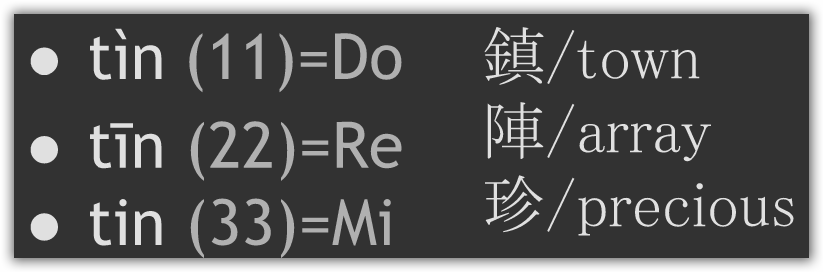
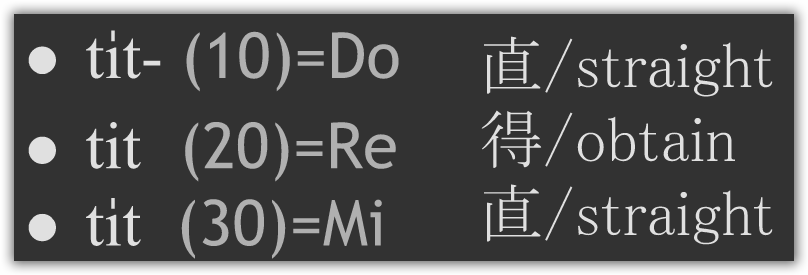
持平調可以分為長平調與短平調。長平調分為低、中、高三個,分別可對應到Do, Re, Mi三個音高,用數字標記則為11, 22, 33。同樣地,短平調也分為低、中、高三個,分別可對應到Do, Re, Mi三個音高,用數字標記則為10, 20, 30。舉例而言,長低平調的11表示兩拍Do,而短低平調的10表示一拍Do和一拍休止符。由於短平調只出現在以/p/, /t/, /k/或喉塞音結尾的音節當中,而長平調只出現在其他的音節型態,兩者不致混淆,因此可化約為低、中、高持平調,並分別簡記為1, 2, 3。

[Level tones]

Level tones can be either long or short. There are three long level tones, low, mid, and high, which respectively correspond to Do, Re, and Mi note in pitch, and which are numerically notated as 11, 22, and 33 in that order. Likewise, there are also three short level tones, low, mid, and high, which respectively correspond to Do, Re, and Mi note in pitch, and which are numerically notated as 10, 20, and 30 in that order. For instance, the 11 notation for the long low level tone indicates two beats of the Do note while the 10 notation for the short one means one beat of the Do note and one beat of pause. Since short level tones only occur in syllables that end with /p/, /t/, /k/, or the glottal stop whereas long ones only occur elsewhere, no confusion between the two types would arise. So, we can simply talk about low, mid, and high level tones and notate them as 1, 2, and 3 respectively without bothering to make the long/short distinction. 


[升降調] 

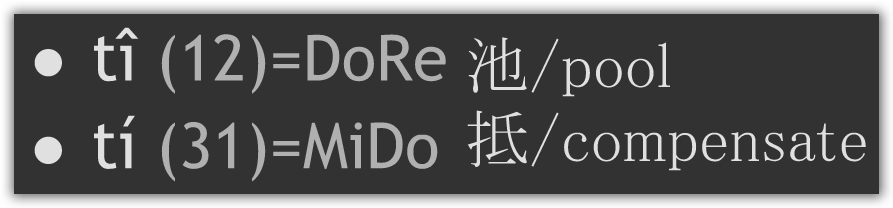
好在台灣閩南語都各只有一個升調和降調,只要音高有上升或下降,即使沒有發出正確的音高,也不致有太大的問題。升調起於Do止於Re,可用數字標記為12。降調起於Mi止於Do,可用數字標記為31。


[Contour tones]
Luckily, there is only one rising tone and one falling tone. So, as long as you are raising or lowering your pitch, you won’t be outrageously misunderstood even if you are not reaching the target pitch height. The rising tone starts with the Do note and rises to the Re note, so it can be numerically notated as 12. The falling tone starts with the Mi note and falls all the way down to the Do note, so it can be numerically notated as 31.


[附註]
此處以台灣南部腔為描述對象,各地的實際發音可能因方言差異而有所不同。

[Note]
The description here is only applicable to the southern dialect. The actual pronunciation may vary from one place to another due to dialectal difference.


參考資料:

  • 台灣閩南語羅馬字拼音方案及其發音學習網

Reference:

  • Tutorial on Romanization and pronunciation of Taiwanese Southern Min (The website is in Mandarin)

URL: http://www.ntcu.edu.tw/tailo/default.htm


Creative Commons License
This work is licensed under a Creative Commons Attribution-


10/07/2012

台灣閩南語聲調(2): 短平調 (Tones in Taiwanese Southern Min (2): short level tones)


台灣閩南語基本聲調
Basic Tones in Taiwanese Southern Min


免責聲明:本站所提供之音檔,除非另外註明出處,係皆由站長參照音韻規律錄製而成,然站長既非嚴格定義下的母語人士、亦非台灣閩南語教師,故此處之音檔僅供學習參考之用。

Disclaimer:  The audio files provided on this site were made of and by me unless otherwise indicated. Nevertheless, I am not a native speaker of Taiwanese Southern Min in the strictest sense, nor am I a teacher of the language. The sound samples are meant for reference only.

[概論]
台灣閩南語總共有八個常用的基本聲調類型,但若只考慮音調的高低起伏,則可以簡化歸結為五個聲調,包含三個平調、一個升調以及一個降調。換言之,只要能區辨三種平調,聲調問題也就能迎刃而解了。

[Intro]

In Taiwanese Southern Min, which is mutually intelligible to Amoy/Xiamenese (also known as Hokkien in South East Asia), there are eight commonly used basic tonal types. However, if we take only pitch level and transition into consideration, the number can be reduced to five, including three level tones, one rising tone, and one falling tone. So, once you've got the level tones covered, you’re already good to go with the remaining tones. (Well, sorta.)

[持平調]

持平調可以分為長平調與短平調。長平調分為低、中、高三個,分別可對應到Do, Re, Mi三個音高,用數字標記則為11, 22, 33。同樣地,短平調也分為低、中、高三個,分別可對應到Do, Re, Mi三個音高,用數字標記則為10, 20, 30。舉例而言,長低平調的11表示兩拍Do,而短低平調的10表示一拍Do和一拍休止符。由於短平調只出現在以/p/, /t/, /k/或喉塞音結尾的音節當中,而長平調只出現在其他的音節型態,兩者不致混淆,因此可化約為低、中、高持平調,並分別簡記為1, 2, 3。

[Level tones]

Level tones can be either long or short. There are three long level tones, low, mid, and high, which respectively correspond to Do, Re, and Mi note in pitch, and which are numerically notated as 11, 22, and 33 in that order. Likewise, there are also three short level tones, low, mid, and high, which respectively correspond to Do, Re, and Mi note in pitch, and which are numerically notated as 10, 20, and 30 in that order. For instance, the 11 notation for the long low level tone indicates two beats of the Do note while the 10 notation for the short one means one beat of the Do note and one beat of pause. Since short level tones only occur in syllables that end with /p/, /t/, /k/, or the glottal stop whereas long ones only occur elsewhere, no confusion between the two types would arise. So, we can simply talk about low, mid, and high level tones and notate them as 1, 2, and 3 respectively without bothering to make the long/short distinction. 


[升降調] 

好在台灣閩南語都各只有一個升調和降調,只要音高有上升或下降,即使沒有發出正確的音高,也不致有太大的問題。升調起於Do止於Re,可用數字標記為12。降調起於Mi止於Do,可用數字標記為31。


[Contour tones]
Luckily, there is only one rising tone and one falling tone. So, as long as you are raising or lowering your pitch, you won’t be outrageously misunderstood even if you are not reaching the target pitch height. The rising tone starts with the Do note and rises to the Re note, so it can be numerically notated as 12. The falling tone starts with the Mi note and falls all the way down to the Do note, so it can be numerically notated as 31.


[附註]
此處以台灣南部腔為描述對象,各地的實際發音可能因方言差異而有所不同。

[Note]
The description here is only applicable to the southern dialect. The actual pronunciation may vary from one place to another due to dialectal difference.


參考資料:
  • 台灣閩南語羅馬字拼音方案及其發音學習網

Reference:
  • Tutorial on Romanization and pronunciation of Taiwanese Southern Min (The website is in Mandarin)


URL: http://www.ntcu.edu.tw/tailo/default.htm


Creative Commons License
This work is licensed under a Creative Commons Attribution-NonCommercial-ShareAlike 3.0 Unported License.

10/05/2012

台灣閩南語聲調(1): 長平調 (Tones in Taiwanese Southern Min (1): long level tones)


台灣閩南語基本聲調
Basic Tones in Taiwanese Southern Min


免責聲明:本站所提供之音檔,除非另外註明出處,係皆由站長參照音韻規律錄製而成,然站長既非嚴格定義下的母語人士、亦非台灣閩南語教師,故此處之音檔僅供學習參考之用。

Disclaimer:  The audio files provided on this site were made of and by me unless otherwise indicated. Nevertheless, I am not a native speaker of Taiwanese Southern Min in the strictest sense, nor am I a teacher of the language. The sound samples are meant for reference only.

[概論]
台灣閩南語總共有八個常用的基本聲調類型,但若只考慮音調的高低起伏,則可以簡化歸結為五個聲調,包含三個平調、一個升調以及一個降調。換言之,只要能區辨三種平調,聲調問題也就能迎刃而解了。

[Intro]

In Taiwanese Southern Min, which is mutually intelligible to Amoy/Xiamenese (also known as Hokkien in South East Asia), there are eight commonly used basic tonal types. However, if we take only pitch level and transition into consideration, the number can be reduced to five, including three level tones, one rising tone, and one falling tone. So, once you've got the level tones covered, you’re already good to go with the remaining tones. (Well, sorta.)

[持平調]

持平調可以分為長平調與短平調。長平調分為低、中、高三個,分別可對應到Do, Re, Mi三個音高,用數字標記則為11, 22, 33。同樣地,短平調也分為低、中、高三個,分別可對應到Do, Re, Mi三個音高,用數字標記則為10, 20, 30。舉例而言,長低平調的11表示兩拍Do,而短低平調的10表示一拍Do和一拍休止符。由於短平調只出現在以/p/, /t/, /k/或喉塞音結尾的音節當中,而長平調只出現在其他的音節型態,兩者不致混淆,因此可化約為低、中、高持平調,並分別簡記為1, 2, 3。

[Level tones]

Level tones can be either long or short. There are three long level tones, low, mid, and high, which respectively correspond to Do, Re, and Mi note in pitch, and which are numerically notated as 11, 22, and 33 in that order. Likewise, there are also three short level tones, low, mid, and high, which respectively correspond to Do, Re, and Mi note in pitch, and which are numerically notated as 10, 20, and 30 in that order. For instance, the 11 notation for the long low level tone indicates two beats of the Do note while the 10 notation for the short one means one beat of the Do note and one beat of pause. Since short level tones only occur in syllables that end with /p/, /t/, /k/, or the glottal stop whereas long ones only occur elsewhere, no confusion between the two types would arise. So, we can simply talk about low, mid, and high level tones and notate them as 1, 2, and 3 respectively without bothering to make the long/short distinction. 


[升降調] 

好在台灣閩南語都各只有一個升調和降調,只要音高有上升或下降,即使沒有發出正確的音高,也不致有太大的問題。升調起於Do止於Re,可用數字標記為12。降調起於Mi止於Do,可用數字標記為31。


[Contour tones]
Luckily, there is only one rising tone and one falling tone. So, as long as you are raising or lowering your pitch, you won’t be outrageously misunderstood even if you are not reaching the target pitch height. The rising tone starts with the Do note and rises to the Re note, so it can be numerically notated as 12. The falling tone starts with the Mi note and falls all the way down to the Do note, so it can be numerically notated as 31.


[附註]
此處以台灣南部腔為描述對象,各地的實際發音可能因方言差異而有所不同。

[Note]
The description here is only applicable to the southern dialect. The actual pronunciation may vary from one place to another due to dialectal difference.


參考資料:

  • 台灣閩南語羅馬字拼音方案及其發音學習網

Reference:

  • Tutorial on Romanization and pronunciation of Taiwanese Southern Min (The website is in Mandarin)

URL: http://www.ntcu.edu.tw/tailo/default.htm


Creative Commons License
This work is licensed under a Creative Commons Attribution-NonCommercial-ShareAlike 3.0 Unported License.